If you've spent any time behind a customer service counter, in a college classroom, or scrolling TikTok in the last year, you've probably encountered it: the Gen Z stare. It's a blank, unreadable expression that shows up exactly where a spoken reply is expected, and it has confused, amused, and occasionally annoyed everyone outside Generation Z. This guide breaks down what the trend actually is, where it came from, and what's really going on behind that expressionless look.
What started as a niche observation among retail workers has turned into one of 2025 and 2026's most-discussed generational topics, covered by major outlets, debated by workplace consultants, and even studied by academic researchers. Below, we unpack the full story — the origin, the psychology, the workplace fallout, and how to actually respond when you're on the receiving end of it.
What Is the Gen Z Stare?
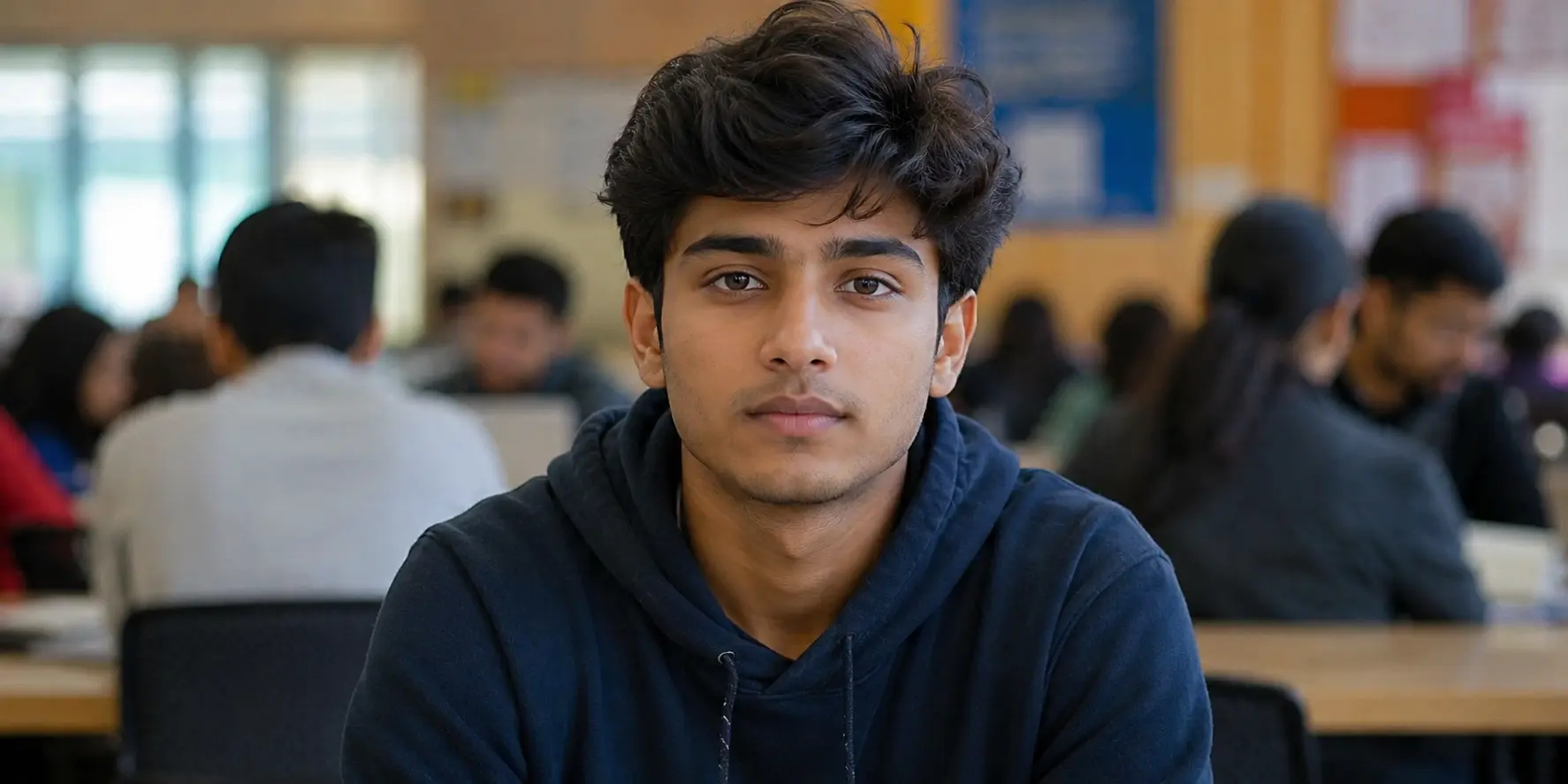
The term describes a prolonged, neutral look that some members of Generation Z give in social situations where a verbal answer would normally be expected. It shows up most often in customer service exchanges — a cashier or barista responding to a simple question with silence and a fixed expression instead of words. Teachers report the same look in classrooms when they ask a question and get nothing back but a steady gaze.
Unlike an angry glare or an awkward pause, the look is usually described as calm, wide-eyed, and unbothered. There's no eye-rolling or visible irritation — just silence where a reply should be. Some describe it as watching a person "buffer," the same way an old video used to freeze for a second before loading.
How to Recognize It
People describing this behavior online tend to agree on a few consistent traits:
- No verbal filler. Missing the small "umm," "yeah," or "sure" that usually signals someone heard you.
- Direct, unblinking eye contact. The look isn't avoidant — it's often described as very direct, just silent.
- A flat facial expression. Neither smiling nor frowning, just neutral.
- A short delay before any response comes, if it comes at all.
Where Did the Gen Z Stare Trend Come From?
The behavior itself is believed to trace back to around 2020, when much of Gen Z's teenage social development happened over video calls during pandemic lockdowns rather than face to face. That shift limited the everyday practice most people get with small talk, verbal filler, and reading a room in person.
The naming of the trend didn't take off until mid-2025, when TikTok creators started posting reaction videos and skits mimicking the look. From there it spread quickly into mainstream coverage, with major outlets all publishing explainers within weeks of each other. By 2026, academic researchers had begun studying it formally as a case of internet culture reshaping real-world nonverbal communication — one researcher proposed treating it as a distinct category of nonverbal behavior, sharing traits with both deadpan humor and stonewalling, while also functioning as a form of social critique and a refusal to follow expected conversational scripts.
A Longer History of Generational Deadpan
Some commentators point out that younger generations giving blank, unreadable looks to their elders isn't entirely new. Similar dynamics have been observed going back to the rise of youth culture in the 1950s and 1960s, and versions of it appear in 1980s teen films where a character's flat expression signals quiet rebellion. What's different this time is the speed and scale at which the behavior was named, filmed, memed, and analyzed — all within a matter of months, thanks to social platforms.
Why Does Gen Z Do the Stare?
There isn't one single explanation for the blank-look trend — most experts point to a combination of overlapping factors:
1. Less In-Person Social Practice
Formative teenage years spent partly in isolation during the pandemic meant fewer chances to build the automatic verbal habits — nodding, "mhm," small talk — that older generations picked up through constant face-to-face interaction.
2. Comfort With Digital Communication
Gen Z grew up texting, DMing, and reacting with emojis rather than speaking. In-person conversation can feel like a less natural format, so the instinctive verbal responses others take for granted don't always fire automatically.
3. Social Anxiety
Some therapists and researchers link the stare to a documented rise in social anxiety among young people. A blank pause can function as a brief mental reset when someone feels put on the spot, rather than a deliberate choice.
4. A Rejection of "Performing" Politeness
Gen Z is frequently described as prioritizing authenticity over forced pleasantries. Some commentators frame the stare as an unconscious refusal to perform enthusiasm or small talk that doesn't feel genuine in the moment.
5. Deadpan Humor and Irony
For some, the stare is intentional — a bit, a joke, or a nod to the internet's love of deadpan, ironic reactions. Not every instance is unconscious; plenty of Gen Zers do it on purpose because it's become a recognizable cultural reference.
The Blank Look at Work
Workplace commentary has been one of the biggest drivers of this trend. Managers and career coaches have described situations where young employees respond to routine questions with silence and a flat expression instead of a verbal answer, which can be misread as disinterest or poor training.
Career experts generally caution against jumping to conclusions. The recommended approach is to treat it as a coachable communication-style gap rather than a discipline issue — giving direct, specific feedback about verbal responsiveness rather than assuming the employee is being deliberately rude.
Human resources professionals have started building this into onboarding conversations for new hires. Instead of assuming new employees already know that a verbal acknowledgment is expected during customer interactions, some companies now spell it out explicitly during training — treating it the same way they'd cover any other communication expectation for a new role.
The Same Pattern in Classrooms
Educators, including university professors, have described the same pattern when asking students questions during lectures or discussions. Some instructors have adapted by explicitly asking for a verbal response, using smaller discussion groups, or building in more comfortable ways for students to participate without being put on the spot in front of a full room.
One recurring theme among teachers is that the pause often breaks the moment they name it out loud — simply saying "I need you to answer me, not just look at me" tends to prompt a normal response. That suggests the behavior is often closer to a habit or a reflex than a conscious refusal to engage.
What the Research Actually Says
Away from the memes, a small but growing body of research is starting to take the topic seriously. Behavioral scientists studying digital-native communication note that heavy reliance on text-based and asynchronous platforms during adolescence can genuinely change how comfortable someone feels producing instant, spoken responses under social pressure. Clinicians who work with young adults have also pointed to a sharp rise in reported social anxiety over the past several years as a contributing factor, separate from the internet-culture side of the story.
At the same time, most researchers are careful to note that a single facial expression can't be reduced to one clean cause. It's more accurate to think of it as a cultural symptom shaped by several forces — the pandemic, screen-first communication habits, and a generation-wide skepticism toward performing emotions they don't feel — all reinforced and amplified once it became a recognizable, shareable meme.
Is the Gen Z Stare Real, or Just a Meme?
It's genuinely both. The label started as an internet joke, and plenty of the content around it is exaggerated for comedic effect. But the underlying communication pattern — reduced verbal responsiveness in certain social situations — is something behavioral researchers, psychologists, and workplace experts treat as a real and observable generational shift, not pure fiction. A 2025 academic paper even proposed formally studying the stare as a new category of nonverbal behavior shaped by internet culture.
Gen Z Stare vs. Millennial Pause: What's the Difference?
These two terms are often confused because they follow a similar naming pattern, but they describe different things. The millennial pause refers to the brief beat millennials take before speaking after hitting record on a video, a habit from years of waiting for phones to catch up. This look, by contrast, happens in live, in-person conversation — it's a silent facial expression, not a recording habit.
How to Respond to It
- Don't assume rudeness. Give the benefit of the doubt before reacting negatively.
- Ask directly. A simple "can you say that back to me?" often breaks the pause naturally.
- Slow down the exchange. Rapid-fire questions can trigger the freeze response more than a relaxed pace.
- For managers: coach verbal responsiveness as a specific, teachable skill rather than treating it as an attitude problem.
- For teachers: offer alternative ways to respond, like a show of hands or written answers, alongside verbal questions.
Curious Which Generation You're Actually In?
Before you decide who's "guilty" of the stare, check your own generational cohort — birth years for Gen Z, Millennials, and Gen Alpha aren't always what people assume.
Find My Generation →Frequently Asked Questions
What does this term actually mean?
A blank, expressionless look some Gen Z individuals give instead of a verbal reply, most often seen in customer service, classrooms, and casual conversation.
Is the Gen Z stare real or just a joke?
Both — it started as an internet joke, but researchers agree the underlying communication pattern is a genuine generational shift, not pure fiction.
Why does Gen Z do the stare?
A mix of reduced in-person social practice during the pandemic, comfort with digital communication, social anxiety, and a cultural preference for authenticity over forced politeness.
Is this behavior a sign of rudeness?
Not necessarily. Most experts describe it as an unconscious communication gap rather than intentional disrespect, though it can be misread as disengagement.
Where did this actually start?
The behavior traces back to pandemic-era isolation around 2020, but the term itself went viral on TikTok and mainstream media in July 2025.
Does this trend show up at work?
Yes, it's most frequently reported in retail and customer service settings, where employees give a blank look instead of answering simple questions.
How should managers respond to it?
Treat it as a communication-style gap, not a performance issue, and offer direct, low-pressure coaching on verbal responsiveness.
What's the difference between the Gen Z stare and the millennial pause?
The millennial pause is a hesitation before recording a video; this trend is a silent, blank expression during live, in-person conversation.
Is it linked to social anxiety?
Some clinicians connect it to rising social anxiety in young people, but it isn't a medical diagnosis and most people who do it aren't clinically anxious.
Do all Gen Z people do the stare?
No — it's a trend observed in some individuals and amplified by social media, not a universal trait shared by everyone born 1997-2012.